Most people know they'd benefit from an accountability partner. The hard part isn't finding someone. It's asking.
What if they think it's strange? What if they forget? What if it feels like you're creating another obligation? What if one of you takes it more seriously than the other?
Those concerns are completely normal.
Effective accountability doesn't require long meetings, constant check-ins, or someone acting like your coach.
At its best, accountability is surprisingly simple. It's two people helping each other become the people they want to be.
What an accountability partner actually does
Many people misunderstand accountability. They picture someone constantly asking whether they completed every task or pointing out every mistake.
That's not accountability. That's supervision.
A great accountability partner isn't there to manage you. They're there to help you remember the commitments you made to yourself.
Sometimes that's a simple message. Sometimes it's celebrating a small win. Sometimes it's encouraging you after a difficult week.
Accountability works because someone else knows what matters to you and reminds you not to give up when motivation fades.
Start with someone you already trust
Your accountability partner doesn't need to be an expert. They don't need to have the same goals. They don't even need to work in the same field.
The best accountability partners are people you already trust: a spouse, a close friend, a sibling, a coworker, a teammate, someone from your small group, or someone who genuinely wants to see you succeed.
Trust matters far more than expertise.
Make the expectations simple
One reason accountability partnerships fail is because they become too complicated.
You don't need hour-long meetings. You don't need spreadsheets. You don't need daily phone calls.
Instead, agree on a few simple expectations.
Say what you're working toward.
Decide how often you'll check in.
Celebrate small wins together.
Keep showing up without pretending.
Consistency beats complexity.
Focus on commitments, not results
One of the biggest mistakes people make is holding each other accountable for outcomes. You can't always control outcomes. You can control your commitments.
Instead of asking, "Did you lose five pounds?" ask, "Did you work out today?"
Instead of asking, "Did you close the deal?" ask, "Did you make the calls you committed to?"
Results often take time. Daily follow-through is something you can control.
Don't become each other's manager
An accountability partner shouldn't create stress. Avoid turning every conversation into an interrogation. Nobody enjoys feeling monitored.
Instead of asking, "Why didn't you do it?" try asking, "What got in the way?" Then focus on tomorrow.
Accountability is about helping someone move forward, not making them feel guilty about yesterday.
Celebrate consistency, not perfection
Everyone misses a day. Everyone has difficult weeks. Everyone loses momentum sometimes.
The goal isn't perfection. The goal is returning to your commitments.
Celebrate consistency. Celebrate honesty. Celebrate getting back on track. Those are the habits that create lasting change.
Technology can make accountability easier
One reason accountability feels awkward is because people assume it requires constant conversations. It doesn't.
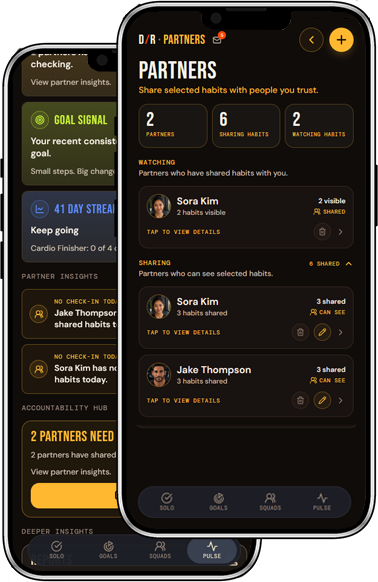
A good accountability system provides visibility without nagging or shame. The useful tension comes from knowing the commitment is visible—not from another person policing you. Both of you can see the work, celebrate progress, and encourage each other naturally.
Technology shouldn't replace accountability. It should remove the friction that makes accountability difficult.
How Discipline Rewards makes accountability feel natural
Discipline Rewards was designed around a simple idea: accountability should encourage people, not embarrass them.
With D/R, you can share specific habits with an Accountability Partner, join an Accountability Squad, track daily commitments, celebrate consistency together, and encourage one another without becoming each other's manager.
Everyone remains responsible for their own commitments. The accountability simply helps make follow-through more likely.
FAQ
Who should be my accountability partner?
Choose someone you trust, respect, and feel comfortable being honest with. They don't need to share your goals. They simply need to care about your success.
How often should we check in?
Whatever cadence you'll actually maintain. For many people, a quick daily check-in or a weekly conversation is enough. Consistency matters more than frequency.
What if I miss a day?
That's normal. Accountability isn't about punishment. It's about helping each other recommit and keep moving forward.
Can an accountability partner really help?
People are more likely to follow through when someone else knows about their commitments. Accountability creates visibility, encouragement, and consistency.
Keep going
These D/R pages connect this article to the product system.
The right accountability adds visibility, not shame
It reduces excuses. It celebrates progress. It reminds you why you started.
Most importantly, it helps you become someone who consistently keeps the promises you make to yourself.
Accountability is not about surveillance. It is about having someone in your corner while the commitment stays visible.